The Theoretical Foundations of Work Design Intelligence
Work Structure assessment is built to decode the structure of work itself.
At its core, it is grounded in a rigorous integration of organizational and psychological theories that explain how work design shapes performance, motivation, and employee health.
Rather than relying on surface-level metrics, Work Structure analyzes the underlying architecture of work, revealing how different job characteristics function as drivers of thriving or sources of strain.
An Integrated Theoretical Foundation
Work Structure module combines two foundational theories to create a precise and actionable model of work design:
1. Job Demands–Resources (JD-R) Model
The Job Demands–Resources model explains how work influences people through two distinct pathways:
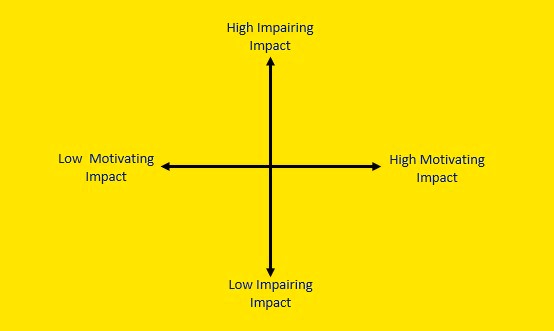
⇒ Job Demands → aspects of work that deplete energy and impair health
⇒ Job Resources → aspects of work that enhance motivation and performance
This allows Work Structure to simultaneously capture:
⇒ risk factors (e.g., overload, role ambiguity, pressure)
Herzberg’s theory adds a critical layer of precision by distinguishing between:
⇒ Hygiene Factors → prevent dissatisfaction and reduce negative outcomes
⇒ Motivating Factors → actively create engagement, growth, and meaning
👉 This distinction helps Work Structure module determine which aspects of work simply prevent problems and which truly drive thriving.
Core Dimensions of Work Structure Assessment
To translate complex work dynamics into actionable insight, Work Structure assessment organizes the structure of work into four core dimensions. Each dimension represents a distinct mechanism through which work influences strain, performance, and motivation, providing a clear and practical foundation for work design decisions.
Factor 1
Job Demands
Aspects of work that:
increase strain
impair health
consume energy
Factor 2
Job Resources
Aspects of work that:
enhance performance
support motivation
enable functioning
Factor 3
Hygiene Factors
Aspects of work that:
prevent dissatisfaction
reduce risk
stabilize environment
Factor 4
Motivating Factors
Conditions that:
drive engagement
create meaning
elevate performance
A Dual-Continua Logic of Work Design
→ A key principle behind Work Structure module is that:
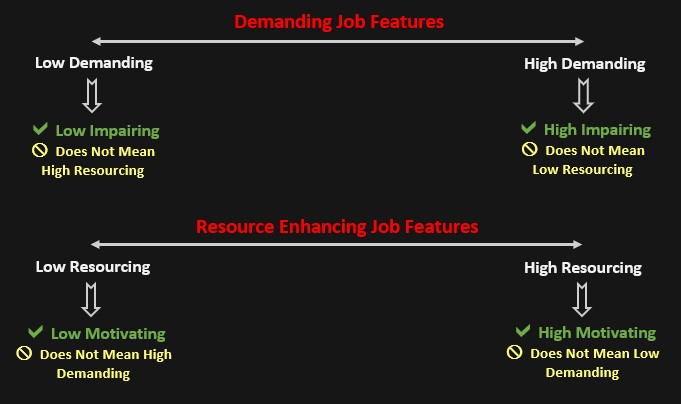
⇒ Job Demands and Job Resources are not opposites
⇒ They are independent and co-existing dimensions
→ This means:
⇒ Reducing demands does not automatically create motivation
⇒ Increasing resources does not automatically eliminate strain
👉 Work must be designed across both dimensions simultaneously.
Resolving a Critical Work Design Challenge
Many job characteristics do not fit neatly into a single category. For example:
⇒ Job insecurity clearly acts as a demand at high levels, but does low insecurity become a meaningful resource?
⇒ Growth opportunities function as strong resources, but are low levels a demand, or simply a lack of motivation?
→ Work Structure addresses this by:
⇒ evaluating each factor based on its dominant functional impact
⇒ allowing factors to be analyzed as demand, resource, or both
⇒ avoiding oversimplified “high vs. low” assumptions
From Theory to Work Design Intelligence
By integrating JD-R and Motivation–Hygiene Theory, Work Structure assessment creates a powerful foundation for:
⇒ understanding how work actually functions
⇒ identifying structural drivers of both performance and strain
⇒ distinguishing between risk reduction and performance enablement
⇒ generating precise, evidence-based work design insights
Implications for Work Design
→ Work Structure transforms theory into actionable design logic:
⇒ Reduce demands that drive overload and burnout
⇒ Strengthen resources that enable performance and engagement
⇒ Redesign ambiguous job features with mixed or unclear effects
→ It also supports deeper design decisions, such as:
⇒ how tasks should be allocated across roles and teams
⇒ how work should be structured between humans and technology
⇒ how to balance efficiency, well-being, and adaptability
Designing Work at the Source
Work Structure shifts the focus from fixing people to redesigning work systems.It provides:
⇒ a multi-dimensional understanding of work structure
⇒ a scientifically grounded assessment logic
⇒ and a c lear pathway from diagnosis to work design transformation
**Work Structure module reveals how work is built,
so organizations can redesign it to enable true and sustainable thriving.**